Why Phage Therapy is Banned in France in 2026
12/04/2026
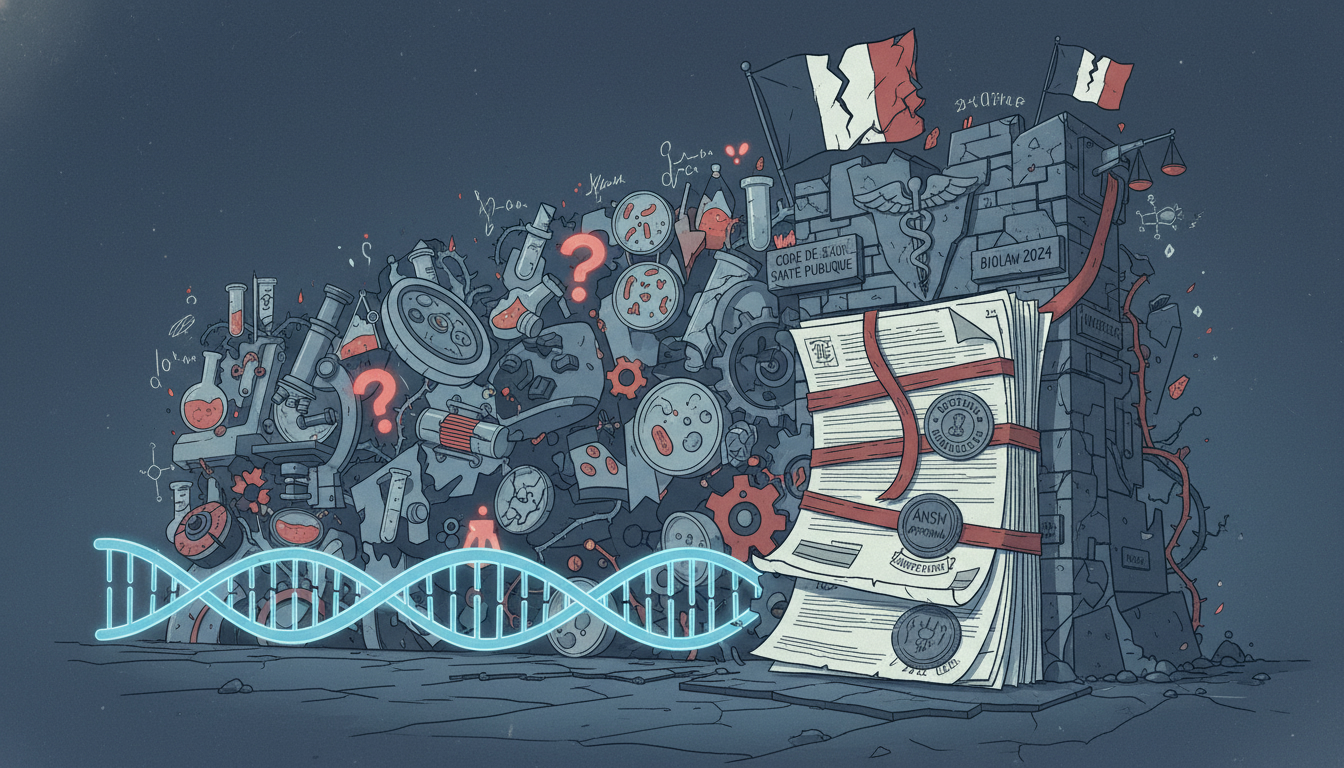
In short, what you will discover in this article: why phage therapy is banned in France by exploring the regulatory, scientific, and medical reasons. You will understand the complex history of this treatment, the current obstacles, and future prospects.
1. Understanding the Reasons for the Ban on Phage Therapy in France
Phage therapy, a method using bacteriophage viruses to target infections, was abandoned in France mainly for historical and regulatory reasons. After its discovery in 1917 by Félix d'Hérelle, it was overshadowed by the arrival of penicillin in 1928, which was easier to produce and standardize. This transition led to the gradual withdrawal of phage-based solutions, notably in 1978 with the disappearance of Vidal preparations and the destruction of the Institut Pasteur collections.
This historical context partly explains why phage therapy remains absent from the French medical landscape despite its potential against rising antibiotic resistance. Indeed, French regulations on phage therapy have never been adapted to integrate this treatment, creating a significant legal void.
2. The French Legal and Regulatory Framework on Phage Therapy
The main obstacle to the legalization of phage therapy in France lies in its unclear legal status. Phages are neither considered medicines nor vaccines or medical devices. They are often classified as magistral preparations, which limits their use outside experimental or compassionate contexts.
The French National Agency for Medicines and Health Products Safety (ANSM) authorizes phage therapy only in compassionate cases, that is, when all other therapeutic options have failed, especially for life-threatening multidrug-resistant infections. This restrictive stance is linked to several factors:
- The absence of robust clinical studies validated by European health agencies.
- Production standards not compliant with European regulations, particularly for phages produced outside the European Union.
- Risks associated with phage therapy in France, notably related to phage variability and the necessity for precise selection for each infection.
These regulatory constraints hinder market authorization and widespread use of phage therapy despite efforts from projects like PHAG-ONE, which aims to develop phages compliant with European requirements.
3. Scientific and Medical Reasons Explaining the Ban
Scientifically, phage therapy poses several challenges. Phage selection must be rigorous: only lytic phages, capable of destroying bacteria without integrating their genome, are used to avoid any risk of transferring undesirable genes. This specificity complicates large-scale production and requires testing on bacterial strains specific to each patient.
Moreover, the lack of controlled clinical trials and long-term data on efficacy and safety limits health authorities' confidence. Phage therapy is often perceived as an experimental approach, explaining its limited use in France.
Finally, phage therapy requires an innovative and rigorous production chain, which is difficult to establish within the current regulatory framework. These technical and scientific obstacles explain why phage therapy has not yet been integrated into routine medical practice.
4. Perspectives and Alternatives Given the Ban in France
Despite these obstacles, phage therapy is experiencing a gradual revival, notably in other countries like Georgia or Poland where it has been used for a long time. In France, successful compassionate cases, such as the one reported in Nature in 2019, show promising potential against multidrug-resistant infections without major side effects.
French health authorities remain cautious but open to change, particularly thanks to research and development projects aimed at overcoming regulatory and scientific barriers. Meanwhile, alternatives to phage therapy in France remain classic antibiotic treatments, even though their effectiveness is diminishing due to antibiotic resistance.
To better understand local challenges and alternatives in other fields, you can check our article on the guesthouse in La Rochelle or discover authentic accommodations like the Pointe du Raz guesthouse.
5. List of Main Obstacles to Legalizing Phage Therapy in France
- Legal Void: lack of clear classification of phages.
- Production Standards: non-compliance with European regulations.
- Lack of Clinical Studies: insufficient proof of effectiveness.
- Medical Risks: need for rigorous phage selection.
- Regulatory Constraints: use limited to compassionate cases.
6. Conclusion
In summary, phage therapy is banned in France mainly due to a vague legal framework, scientific hurdles, and strict production standards. However, its potential against antibiotic resistance is sparking renewed interest that could change the situation. To stay informed about these advances, don’t hesitate to follow medical news and innovative projects in this field.
To deepen your knowledge on authentic accommodations during your travels, discover our advice on the Pointe du Raz guesthouse.
Sources:
The article from Futura Sciences offers a clear analysis of the scientific and regulatory obstacles explaining why phage therapy remains marginal in France.

Marine Lefèvre
Passionnée par le tourisme alternatif et l'hébergement chez l'habitant, je m'intéresse depuis plusieurs années aux échanges authentiques entre voyageurs et hôtes. Forte d'une expérience concrète dans la mise en relation et l'accueil participatif, j'accompagne aussi bien les visiteurs que les particuliers qui souhaitent offrir une chambre ou un logement. Mon expertise me permet de dédramatiser les démarches administratives et de clarifier les attentes pour une cohabitation harmonieuse. Sur BienvenueChezNous, je partage des conseils pratiques et des retours d'expérience pour guider chacun vers une immersion conviviale et réussie, tout en apportant des réponses simples et accessibles.